For international owners and occupiers
Fire alarm systems in the Netherlands
Dutch fire safety rules are strict and detailed, and they are hard to read if you did not grow up with them. This is how they work, and we install systems that meet them.
Who decides whether my building needs a fire alarm system?
 Reviewed by Koen, adviserUpdated Based on: Bbl annex II (BWBR0041297) · NEN 2535 · EN 54MegaSnel · Dutch CoC 34139868
Short answer: the Dutch building decree, the Besluit bouwwerken leefomgeving or Bbl. It looks at what the building is used for, its floor area and the height of the highest floor. Whether people sleep there counts as part of the use. Your municipality and your insurer can ask for more than the Bbl does.
Two things tend to surprise people who arrive from abroad. The requirement follows the use of the building, so a small care home can face heavier rules than a large warehouse. And a Dutch fire alarm system is designed for the building it sits in. That design follows a national standard, NEN 2535, and every component has to meet the European EN 54 series.
Someone is also responsible for keeping it working. The Bbl puts that duty on the owner, or on whoever is entitled to make changes to the building. In a leased building the lease says who does what. Read that part before you sign.
What drives the requirement and the cost is on our page about when a system is required. The standards behind the devices themselves are on EN 54 explained.
The Dutch terms you will run into
You will see these words in quotations and in letters from the municipality or the inspector. Knowing them saves a lot of confusion.
| Dutch term | What it means |
|---|---|
| Bbl | Besluit bouwwerken leefomgeving, the building decree that says when a fire alarm system is required. It replaced the old Bouwbesluit. |
| Brandmeldinstallatie (BMI) | Fire detection and alarm system. |
| Ontruimingsalarminstallatie | Evacuation alarm system. A separate installation with its own standard, NEN 2575. |
| NEN 2535 | The Dutch standard for designing and installing a fire alarm system. It covers where detectors go, how zones are laid out and how the system is commissioned. |
| NEN 2654-1 | The standard for maintaining that system. |
| Programma van Eisen (PvE) | Schedule of requirements. It records what your building needs, and everything is checked against it later. |
| Logboek | Logbook. Every alarm, fault, shutdown and maintenance visit goes in it. At an inspection it is one of the first things the inspector asks for. |
| Doormelding | Automatic transmission of an alarm to a monitoring centre, and from there to the fire service. |
| Inspectiecertificaat | Inspection certificate. Where it is required, an independent accredited inspection body issues it. The installer cannot. |
How we install
Without opening up your building
In a cabled installation most of the cost and nearly all of the mess comes from the cabling. Trunking goes up, holes go through fire compartments, and afterwards the walls need filling and painting.
We fit wireless devices, and each one carries EN 54 certification. Detectors, manual call points and sounders talk to the panel over a supervised radio link. In an office where people keep working, or on a leased floor you may not drill into, that turns weeks of disruption into a few days.
Where wireless is not the right answer
Short answer: wireless suits most offices, shops and warehouses. A building that needs spoken evacuation messages needs another system. Where there is heavy radio interference, we measure before we design.
We install wireless systems, so you might expect us to praise them without limits. You are better off hearing the limits now than at handover. These are the four we raise with every client:
- Batteries need replacing. A detector runs for years on one battery and warns the panel when it runs low. It is still a recurring task that a cabled system does not have.
- Every extender talks to the panel directly. A range extender does not pass signals on to another extender, and the system will not route around a problem by itself. So the design has to be right from the start.
- Spoken evacuation is not possible with this system. Some larger public buildings need a type A evacuation alarm that gives spoken instructions. For those we propose a different solution.
- Radio is radio. EN 54-25 sets requirements for link reliability and for reporting a lost connection. Deliberate jamming is explicitly outside its scope. In a place with heavy industrial interference we measure first.
If wireless is wrong for your building, you will hear it in the advice call.
What a system consists of
The components, and the standard behind each
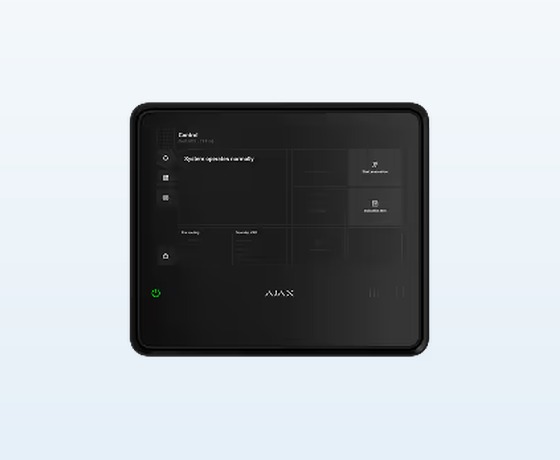
Control panel
The centre of the installation. It shows which zone is in alarm and reports faults per device. It also sends the alarm on to the monitoring centre.
EN 54-2 · 54-4 · 54-21 · 54-25; assessed as a system under EN 54-13 (Belgian certificate)
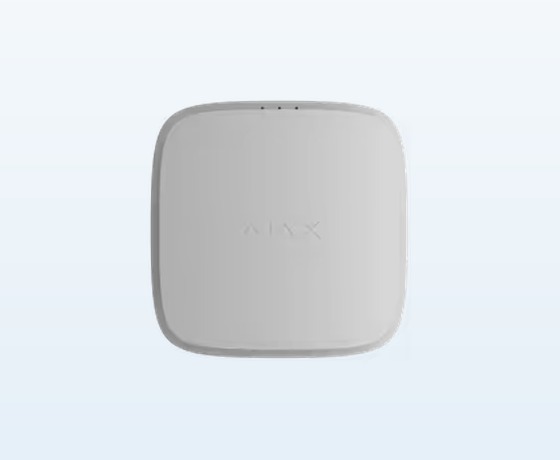
Smoke detector
Uses two wavelengths of light. According to the manufacturer this helps it tell smoke from dust and steam.
EN 54-7 · 54-25
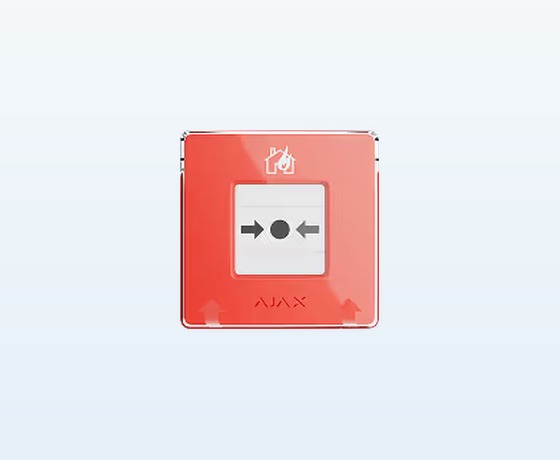
Manual call point
The red unit by the exit, for someone who sees a fire before a detector picks it up.
EN 54-11 · 54-25
Frequently asked
Questions we get from international clients
Do you work in English?
Yes. Emails, the schedule of requirements and the handover file can all be in English. The standards themselves stay in Dutch, and so do formal letters to the municipality or the fire service. We translate the parts that matter and tell you plainly what a document says.
Our head office wants to use the system we use in other countries. Is that possible?
Sometimes, so check it before you commit. A system accepted elsewhere in Europe still has to meet two Dutch conditions: the components must be EN 54 certified, and the design must follow NEN 2535, which is a Dutch standard. Group standards usually run into trouble on that second point.
Send us the specification and we will point out the gaps.
We lease the building. Is this our responsibility or the landlord’s?
The lease decides that. In practice the landlord usually owns the installation and the tenant handles the day-to-day management: the logbook, the alarms and the periodic checks. Put it in writing, because after an incident each party tends to point at the other.
Whatever the lease says, the occupier lives with the consequences.
Is a wireless fire alarm system actually permitted under Dutch rules?
Yes. The Bbl refers to “a fire alarm system as referred to in NEN 2535” and says nothing about how devices are connected. The word cable does not appear. The components must meet EN 54, and for wireless links that is the separate part EN 54-25.
The inspection scheme behind the certificate has its own check for wireless communication between devices, with its own acceptance criterion.
Who issues the certificate?
An independent accredited inspection body. We design and install the system, maintain it afterwards and draw up the schedule of requirements. Where a certificate is required, we make sure the installation and its file are ready for the inspector. The verdict is theirs.
Step 1: an advice call
Tell us about your building
Describe the property and what prompted your question. We will tell you which requirements apply and what a suitable installation looks like.